

 19 January, 2026
Transcatheter Tricuspid Valve Implantation: A Comprehensive, Patient-Friendly Guide to Treating Tricuspid Valve Disease Without Open-Heart Surgery
Tricuspid valve disease has long been called the forgotten valve problem of the heart. For many years, it was often managed only with medications, even when symptoms became severe. Today, advances in heart care have changed this approach. Transcatheter Tricuspid Valve Implantation offers a minimally invasive option for patients who previously had limited treatment choices.
This procedure allows doctors to treat severe tricuspid valve disease without opening the chest or stopping the heart. For many patients, especially those who are elderly or at high surgical risk, it provides relief from long-standing symptoms and a meaningful improvement in quality of life.
Understanding the Tricuspid Valve and Its Role
The tricuspid valve is located between the right atrium and the right ventricle. Its role is to ensure that blood flows smoothly in one direction as it moves through the right side of the heart before being sent to the lungs.
When the tricuspid valve does not close properly, blood leaks backward with every heartbeat. This condition is called tricuspid regurgitation. Over time, the backward flow of blood causes pressure to build up in the right side of the heart and the veins of the body.
As a result, patients may experience swelling of the legs and feet, abdominal bloating, liver congestion, fatigue, poor appetite, shortness of breath, and reduced ability to perform daily activities. If left untreated, severe tricuspid valve disease can lead to progressive right-sided heart failure.
Why Tricuspid Valve Disease Is Often Diagnosed Late
Unlike left-sided heart valve problems, tricuspid valve disease may not cause early chest pain or dramatic symptoms. Many patients initially attribute leg swelling or tiredness to aging or other medical conditions.
Because of this, tricuspid regurgitation is frequently diagnosed at an advanced stage, when the heart has already undergone structural changes. Traditional open-heart surgery at this stage carries higher risk, making minimally invasive options especially valuable.
What Is Transcatheter Tricuspid Valve Implantation
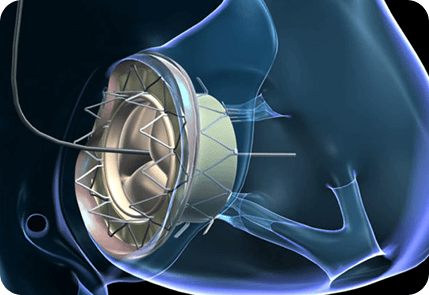
Transcatheter Tricuspid Valve Implantation is a procedure in which a new valve is placed inside the heart using a catheter-based approach. The valve is delivered through a vein, most commonly from the leg or neck, and guided carefully to the tricuspid valve position.
Once positioned correctly, the new valve is deployed and begins functioning immediately. This reduces or eliminates backward blood flow and helps restore more normal heart function.
The procedure avoids large surgical incisions and does not require the heart to be stopped.
How This Procedure Helps the Heart and the Body
By correcting the faulty tricuspid valve, this procedure reduces pressure overload on the right side of the heart. Improved valve function allows blood to move efficiently forward instead of pooling backward.
Patients often notice gradual improvement in symptoms such as swelling, breathlessness, abdominal discomfort, and fatigue. Over time, reduced strain on the heart may help prevent further deterioration of right heart function.
Many patients report better sleep, improved mobility, and greater independence in daily life.
Who Is Considered for This Treatment
Transcatheter tricuspid valve implantation is generally recommended for patients with severe tricuspid regurgitation who continue to have symptoms despite optimal medical therapy.
It is especially beneficial for individuals who are considered high risk for open-heart surgery due to age, previous heart surgeries, lung disease, kidney problems, or other medical conditions.
Before recommending the procedure, doctors perform detailed assessments using echocardiography, CT scans, and sometimes cardiac MRI to evaluate valve anatomy, heart size, and overall suitability.
Preparation Before the Procedure
Before the procedure, patients undergo thorough evaluation to ensure safety and effectiveness. This includes heart imaging, blood tests, and assessment of other medical conditions.
Doctors explain the procedure in detail, discuss expected benefits and possible risks, and answer any questions. Medications may be adjusted before the procedure, and fasting is usually required on the day of treatment.
What Happens During the Procedure
The procedure is performed in a specialized cardiac catheterization laboratory by a team of experienced heart specialists. The patient is given anesthesia to ensure comfort and safety.
A catheter is gently inserted through a vein and guided to the heart using advanced imaging. The new valve is carefully positioned at the tricuspid valve location and deployed with precision.
Once placed, the valve begins working immediately. Blood flow improves, and leakage is significantly reduced. The catheter is then removed, and the access site is closed.
The procedure usually takes several hours, depending on individual anatomy and complexity.
Recovery After Transcatheter Tricuspid Valve Implantation
Recovery is generally smooth and faster than traditional surgery. Most patients are monitored closely for a short period and are able to sit up and walk within a day.
Hospital stay is usually brief, often a few days. Swelling may reduce gradually over weeks as the body adjusts to improved heart function.
Patients are advised regular follow-up visits to monitor valve performance, heart function, and overall health.
Life After the Procedure
After recovery, many patients experience improved stamina, reduced swelling, and better quality of life. Activities that were previously difficult often become easier.
Ongoing medical care remains important. Medications may be continued or adjusted, and lifestyle measures such as maintaining a healthy diet, managing fluid intake, and staying physically active are encouraged under medical guidance.
Frequently Asked Questions About Transcatheter Tricuspid Valve Implantation
Is this procedure an open-heart surgery
No. It is a minimally invasive procedure performed through blood vessels without opening the chest.
Will I be awake during the procedure
The procedure is performed under anesthesia, so patients are comfortable and pain-free.
How long does recovery take
Most patients recover within days and gradually feel better over the following weeks.
Is this procedure safe for elderly patients
Yes. It is specifically designed for patients who are at high risk for conventional surgery.
Will the valve need to be replaced again
The valve is designed for long-term use. Regular follow-up ensures early detection of any future issues.
Will I still need medications
Some medications may still be required depending on overall heart health. Your doctor will guide you individually.
Blog Image Creation Prompts
Blog Cover Image Prompt
Create a realistic medical illustration of the human heart highlighting the tricuspid valve on the right side. Show a catheter delivering a valve through a vein. Use soft blue, white, and neutral tones with a clean hospital-style background.
Patient Education Image Prompt
Create an easy-to-understand illustration comparing a healthy tricuspid valve and a leaking tricuspid valve. Show backward blood flow clearly with arrows. Design should be simple and patient-focused.
Procedure Explanation Image Prompt
Create a visual showing a minimally invasive heart procedure performed in a modern catheterization laboratory. Focus on catheter-based technology and precision, avoiding surgical imagery.
Recovery and Outcome Image Prompt
Create a calm, hopeful image of a patient walking comfortably after a heart procedure, suggesting recovery, improved energy, and better quality of life.