

 2 October, 2026
Severe Tricuspid Regurgitation Treatment in India: Surgery, T-TEER or TTVR?
Severe tricuspid regurgitation was once called the “forgotten valve” problem. Today it is one of the fastest-moving areas in heart care. Patients in India now have more choices than ever: tricuspid surgery, transcatheter edge-to-edge repair (T-TEER), and transcatheter tricuspid valve replacement (TTVR).
But which is right for you? This guide explains how tricuspid regurgitation treatment in India is chosen, written from the experience of Dr A B Gopalamurugan, the interventional cardiologist who performed India’s first transcatheter tricuspid valve implantation and a pioneer of transcatheter mitral, tricuspid and aortic (TAVR/TAVI) therapies in the country.
What Is Tricuspid Regurgitation?
The tricuspid valve controls blood flow between the right atrium and right ventricle. When it leaks, blood flows backwards into the veins of the body. Severe tricuspid regurgitation (TR) can cause:
- Swelling of the legs and abdomen (ascites)
- Fatigue and reduced exercise capacity
- Liver congestion and poor appetite
- Kidney dysfunction and repeated hospital admissions
Common causes of severe TR
- Functional (secondary) TR – the valve is normal but stretched by an enlarged right heart, atrial fibrillation, left-sided valve disease or pulmonary hypertension
- Lead-related TR – pacemaker or ICD leads interfering with leaflet closure
- Primary TR – damage to the valve itself (rheumatic disease, infection, congenital conditions)
- Failed surgical valve or ring – a previously implanted tricuspid bioprosthesis has degenerated
Treatment Option 1: Medicines
Diuretics (water tablets) reduce swelling and congestion, and treating atrial fibrillation or heart failure helps. However, medicines do not fix the leaking valve. When symptoms persist despite medicines, valve intervention should be considered before the right ventricle and liver are permanently damaged. See our heart failure therapies.
Treatment Option 2: Tricuspid Surgery in India
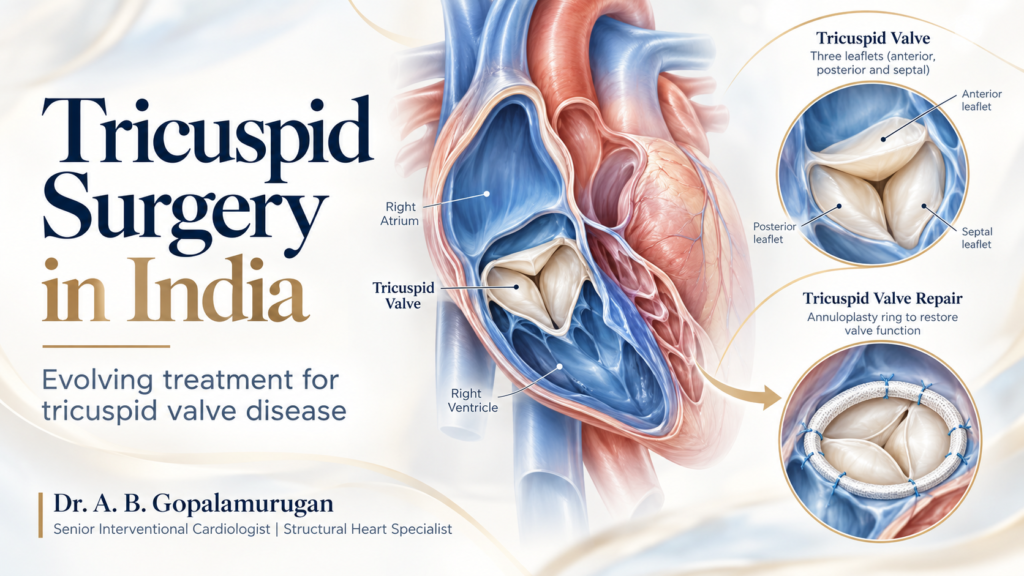
Tricuspid surgery involves repairing the valve (usually with an annuloplasty ring) or replacing it, through open-heart or minimally invasive surgery.
- Often the best choice when the patient is already having mitral or aortic valve surgery
- Suitable for younger, fitter patients and some primary valve diseases
- Isolated tricuspid surgery in late-stage disease carries higher risk, especially with liver or kidney dysfunction
Learn more on our surgical valve treatment page.
Treatment Option 3: T-TEER (Transcatheter Tricuspid Edge-to-Edge Repair)
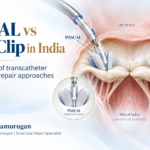
T-TEER works like MitraClip for the mitral valve. A clip or paddle device is guided through the groin vein and grasps the tricuspid leaflets to reduce the gap through which blood leaks. Devices such as TriClip and PASCAL are used for this purpose worldwide.
T-TEER may suit patients with:
- A moderate coaptation gap between leaflets
- Good leaflet length and mobility
- Clear imaging windows on transoesophageal echo (TEE)
- A wish to keep their own valve
Large international studies such as TRILUMINATE have shown that T-TEER can reduce TR and improve quality of life in selected patients. Read about the same principle in the mitral valve: MitraClip & TEER in India.
Treatment Option 4: TTVR in India (Transcatheter Tricuspid Valve Replacement)
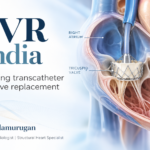
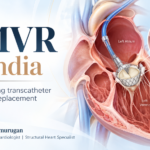
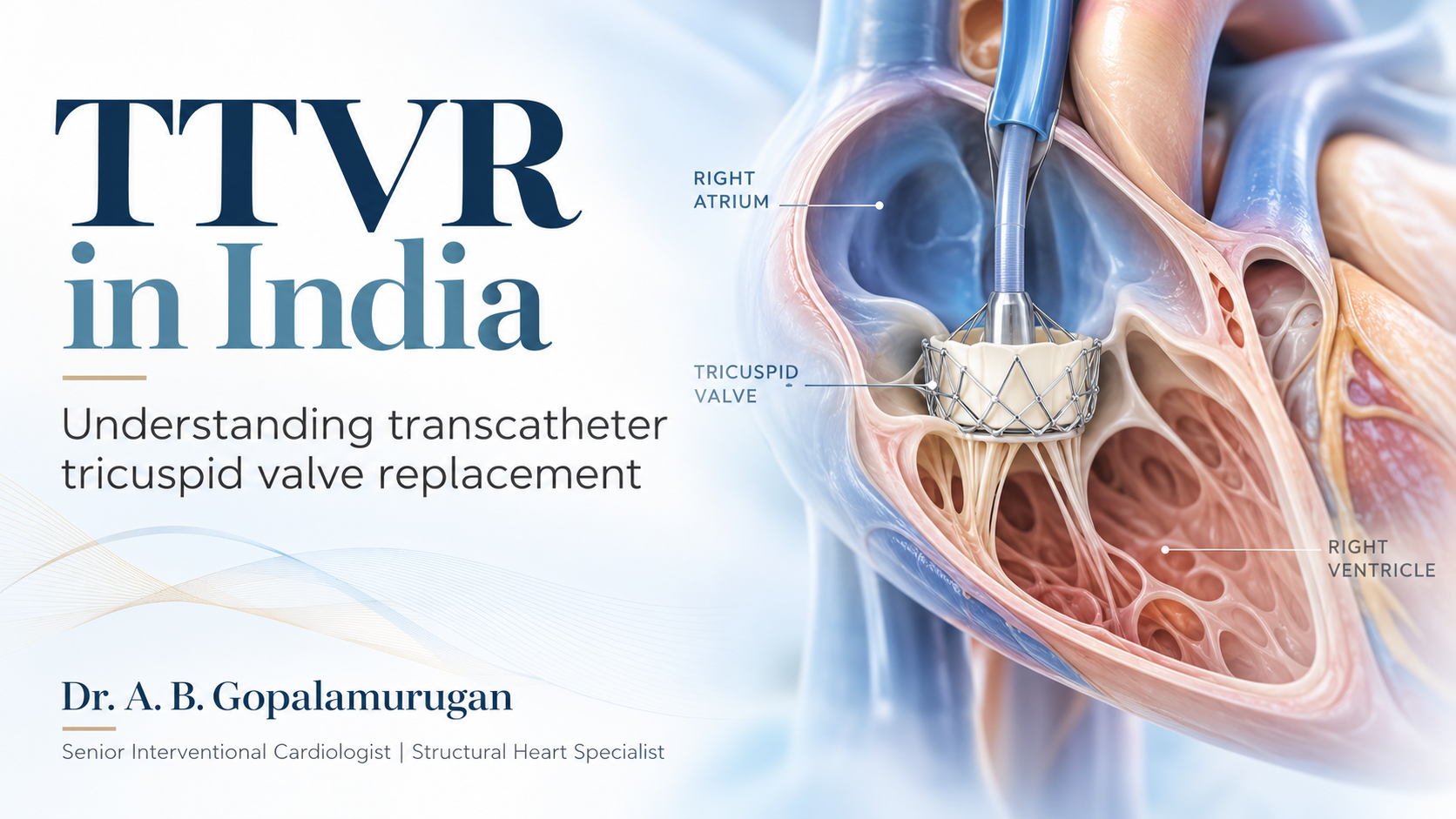
TTVR implants a new valve inside the native tricuspid valve via a catheter, without opening the chest. Dedicated systems such as EVOQUE have been studied in trials including TRISCEND II, showing major reductions in TR and improvement in symptoms.
TTVR may be preferred when:
- The leaflet gap is too large for repair
- Pacemaker leads make clipping difficult
- Leaflets are short, restricted or poorly visualised
- A more complete elimination of the leak is the goal
For a failed tricuspid tissue valve or ring, tricuspid valve-in-valve implantation is often possible – the very procedure Dr Gopalamurugan performed as India’s first transcatheter tricuspid valve implantation in 2016.
Explore our Transcatheter Tricuspid Valve Implantation page and the patient-friendly TTVI guide.
Surgery vs T-TEER vs TTVR: Quick Comparison
| Factor | Tricuspid Surgery | T-TEER | TTVR |
|---|---|---|---|
| Approach | Open or minimally invasive surgery | Catheter via groin vein | Catheter via groin or neck vein |
| Valve | Repaired or replaced | Own valve repaired | Valve function replaced |
| Leak reduction | Usually substantial | Good in suitable anatomy | Usually most complete |
| Best for | Concomitant left-sided surgery, fit patients | Moderate gaps, suitable leaflets | Large gaps, leads, complex anatomy |
| Recovery | Longer | Days | Days |
| Special considerations | Surgical risk, liver/kidney function | Imaging quality, leaflet anatomy | CT sizing, anticoagulation, conduction issues |
How the Right Treatment Is Chosen
At HeartTeam India, every tricuspid patient undergoes a structured assessment:
- Echocardiography and 3D TEE – grade of TR, leaflet anatomy and coaptation gap
- Cardiac CT – annulus size and venous access for TTVR planning
- Right ventricular function and pulmonary pressure – sometimes with right heart catheterisation
- Pacemaker/ICD lead assessment
- Liver, kidney and frailty evaluation
- Heart Team discussion – cardiologists, cardiac surgeons, imaging and anaesthesia specialists agree on one plan
Many patients have both mitral and tricuspid disease. Comprehensive planning across both valves is essential – see our guide on TMVR vs MitraClip.
Dr A B Gopalamurugan: Pioneer of Tricuspid, Mitral and TAVR/TAVI Therapies in India
Choosing a team with experience across every heart valve gives patients access to the full range of options. Dr Gopalamurugan’s pioneering milestones include:
- India’s first transcatheter tricuspid valve implantation (2016) – published in the Indian Heart Journal
- India’s first transcatheter mitral valve implantation (2017) – published in the Indian Heart Journal
- First TAVI/TAVR in South India (2015) and extensive TAVR experience
- Three of the world’s first transcatheter valve procedures
- Introduced the largest number of transcatheter valve therapies to India
- Founder and Course Director of India Valves, India’s largest transcatheter valve course
- Trained and practised for over 16 years in London, UK (MD, MRCP, FRCP)
Frequently Asked Questions: Tricuspid Regurgitation Treatment
What is the best treatment for severe tricuspid regurgitation?
There is no single best treatment. Options include medicines (mainly diuretics), tricuspid surgery, transcatheter tricuspid edge-to-edge repair (T-TEER) and transcatheter tricuspid valve replacement (TTVR). The choice depends on the cause of the leak, valve anatomy, right heart function, pacemaker leads and overall surgical risk.
Is tricuspid valve treatment possible without open-heart surgery in India?
Yes. In selected patients, T-TEER and TTVR are performed through a vein in the groin or neck, without opening the chest. Dr A B Gopalamurugan performed India’s first transcatheter tricuspid valve implantation in 2016.
What is the difference between T-TEER and TTVR?
T-TEER repairs the tricuspid valve by clipping leaflets together to reduce the leak. TTVR replaces the valve function with a new transcatheter valve, which usually reduces the leak more completely but needs careful anatomical sizing and often anticoagulation afterwards.
When is tricuspid surgery preferred?
Surgery is often preferred when a patient is already having left-sided heart valve surgery, when the patient is younger and fit, or when the anatomy is unsuitable for transcatheter treatment. Isolated tricuspid surgery in late-stage disease can carry higher risk, which is why early assessment matters.
Can a failed surgical tricuspid valve be replaced without surgery?
Often yes. A worn-out tricuspid tissue valve can frequently be treated with a transcatheter valve-in-valve procedure, the same approach used in India’s first transcatheter tricuspid valve implantation.
Get Expert Tricuspid Valve Assessment in Chennai
If you have severe tricuspid regurgitation, swelling that keeps returning despite medicines, or a failing tricuspid valve, early specialist review can make a real difference.
Book a consultation with Dr A B Gopalamurugan:
📞 OP appointments: +91 91760 88898
✉️ secretary@gopalamurugan.com
📍 2nd Floor, 46 & 48, Masilamani Rd, Balaji Nagar, Royapettah, Chennai 600014
Contact us online
This article is for patient education only and is not a substitute for individual medical advice. Treatment decisions should be made with your cardiologist and Heart Team.